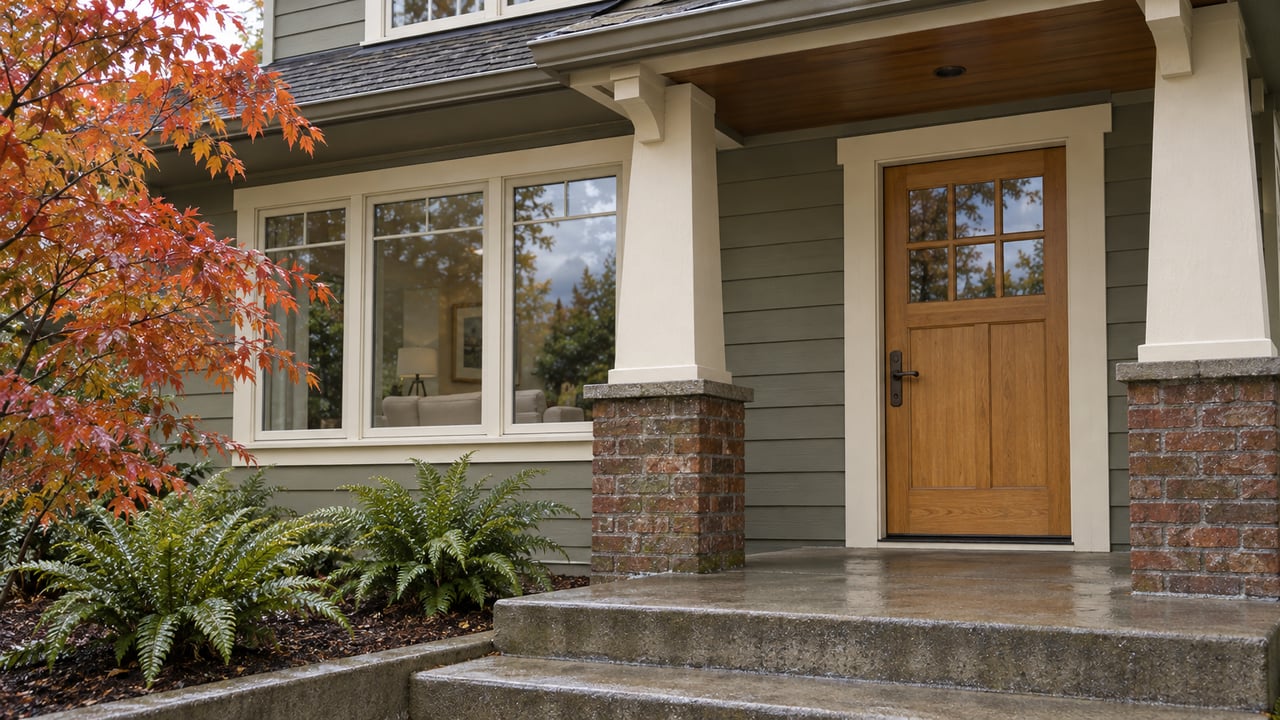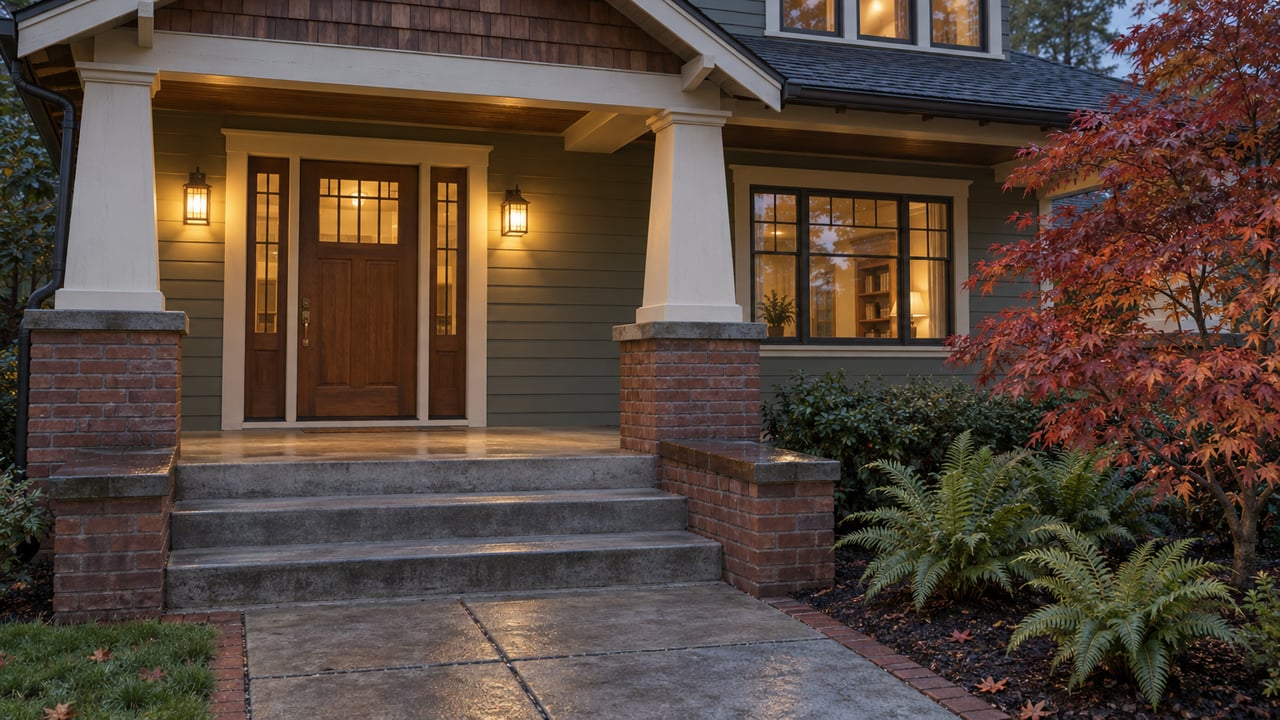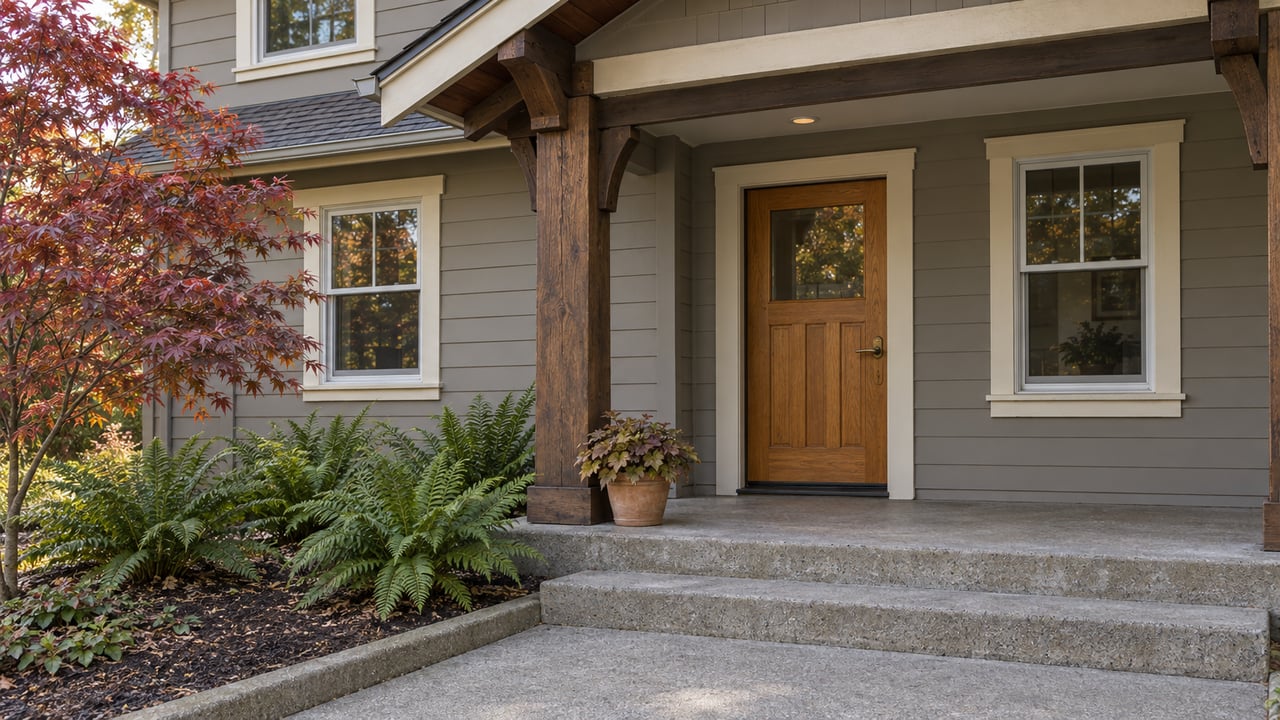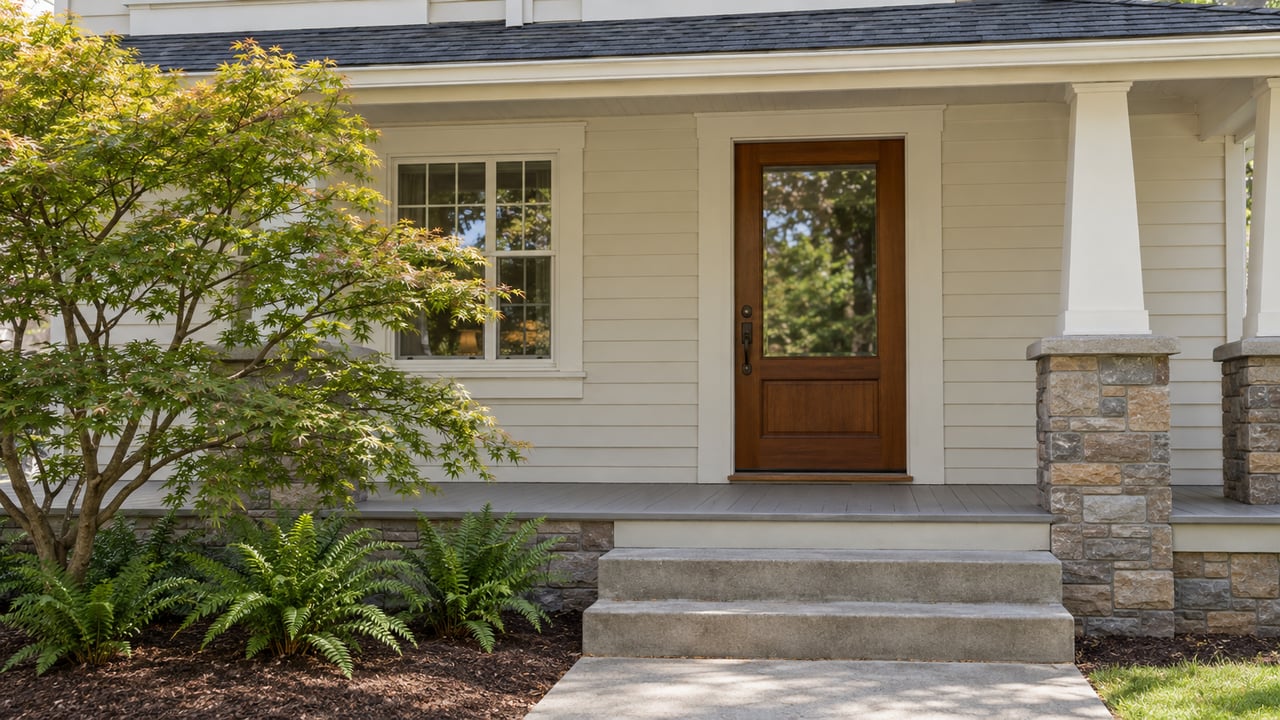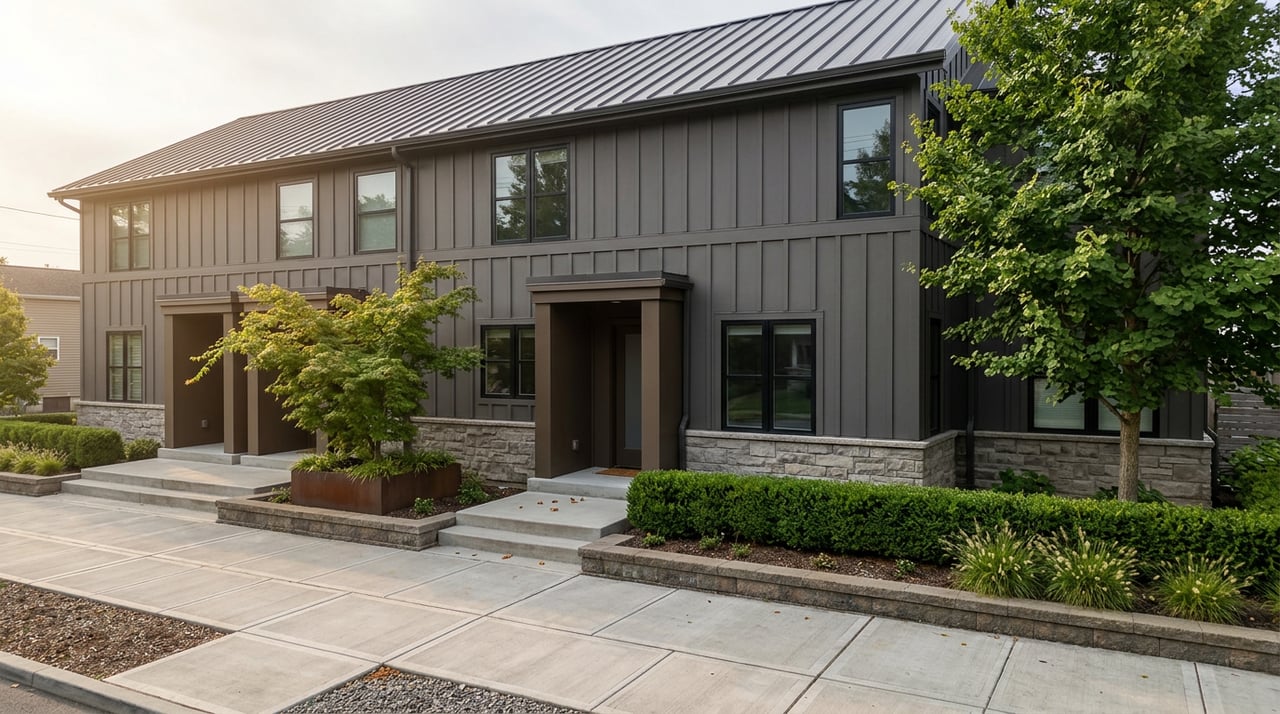
Walk down a block in inner Portland right now and you will likely pass a hundred-year-old bungalow standing next to a brand new building holding three or four separate front doors. A four-unit building went up at 6219 Stanton St in 2026. A three-unit building went up at 2478 SE Lincoln St in 2025. Neither is unusual anymore. What's easy to miss, scrolling listings on a laptop, is that these two kinds of properties can carry nearly identical price tags while being fundamentally different purchases.
That's the piece worth understanding before you fall for a listing photo. Portland didn't just get more housing options after 2021. The city built a financial incentive into its zoning code that makes a fourplex more profitable to construct than a single house on the exact same lot, and that difference is now showing up on your search results whether you notice it or not.
Same Zone, Very Different Product
Pull up two listings on the same inner Portland block, both zoned R5, both priced in the high $400,000s. One is a whole house on its own lot: a full yard, a private driveway. The other might be a single unit inside a fourplex.
Online, both can look like a normal home purchase. Three bedrooms, two baths, a similar price per square foot. The difference only becomes obvious once you check the plat, and by then some buyers have already toured, fallen for the finishes, and started thinking about furniture placement.
The Mechanism: Floor Area, Not Just Legalization
Oregon's House Bill 2001 required Portland to allow duplexes, triplexes, and fourplexes in areas that used to be single-family only. That much is well known. What actually determined whether builders took the offer is buried in Title 33 of Portland's zoning code, in a set of floor area ratio tables that most buyers never look at and most agents rarely explain.
On a typical R5 lot, CommunityScale says the code allows a fourplex roughly 60 percent more total floor area than a single detached house would get on the identical parcel. That extra buildable square footage is the entire story. It means a builder who puts up four units instead of one gets meaningfully more total space to sell, spread across four price points instead of one. The land cost, which is the single biggest expense in Portland construction, gets divided four ways instead of paid once.
Minneapolis passed a similar reform in 2019, eliminating single-family-only zoning citywide two years before Portland's Residential Infill Project took effect. The results were far more modest there. Minneapolis capped the total building size regardless of how many units went inside, so a triplex had to squeeze three homes into the same envelope allowed for one house, producing small, awkward units that didn't pencil out for many builders. Portland made the building bigger every time a builder added a unit, which is a different incentive entirely. Same legalization, opposite math, and one city ended up with a genuine construction wave while the other saw gradual, uneven adoption.
City planner Morgan Tracy described this shift in an interview with Oregon Public Broadcasting: before the Residential Infill Project, the accessory dwelling unit was the default way to add housing density on a single-family lot. After the floor area rules changed, builders pivoted hard toward fourplexes, because the code rewarded exactly that choice.
What the Numbers Say
The scale of this shift shows up in the city's own affordability comparisons. In 2024, an annual household income of roughly $233,000 was needed to afford the average new single-family house in Portland, priced around $916,000. A triplex or fourplex unit that same year averaged about $460,000, requiring roughly half that income, around $116,000, according to figures the Bureau of Planning and Sustainability shared publicly. New middle housing units have been selling for $250,000 to $300,000 less than comparable single-family homes, and since the Residential Infill Project took effect in 2021, roughly 23 percent of new housing built in Portland, close to 4,067 units, has been this kind of middle housing rather than a standalone house.
None of that means a fourplex unit is a worse purchase. It means the "median price" you see for a Portland zip code is increasingly a blend of two different products: whole houses on their own lots, and individual units inside multi-owner buildings on shared parcels. Two homes at the same price point are no longer guaranteed to be the same kind of ownership.
What You're Actually Buying, Side by Side
| Whole single-family lot | Unit inside a fourplex or triplex | |
|---|---|---|
| Typical price gap | Full market rate for the neighborhood | Often $250,000 to $300,000 less than a comparable house |
| Shared elements | Usually none | Shared walls, sometimes shared driveways or utility easements |
| Resale comparison pool | Other single-family homes nearby | Other middle housing units, which may be a thinner comp set |
That last row matters more than it looks. If you buy one unit of a new fourplex, your closest resale comparisons may be the other three units in the same building, not the bungalows down the street. In a neighborhood where this kind of construction is still new, that comp set can be thin.
Questions Worth Asking Before You Write an Offer
- Was this lot created through a Middle Housing Land Division? If so, ask to see the recorded land division and understand exactly what you'd own versus what's shared.
- What's the zoning designation, and has the site already used its floor area allowance?
- Are there reciprocal maintenance agreements for shared driveways, utility lines, or exterior walls? They are worth reading in full.
- How many comparable units have sold nearby, and are they whole houses or other middle housing units? A comp pulled from the wrong category can distort what you think you're paying for.
This pattern is showing up across Portland's single-dwelling zones, from the R2.5 and R5 lots common on the inner eastside to the R10 and R20 parcels more typical of the West Hills and outer eastern neighborhoods, where the second phase of the Residential Infill Project extended similar options to larger lots. Wherever you're shopping inside city limits, the zoning designation on a listing sheet now tells you more about what you're actually buying than the square footage does.
If you're comparing a listing in Portland against something in a surrounding suburb, this is exactly the kind of local mechanic that doesn't show up on a national portal search. It's the difference between reading a price and understanding what that price is attached to.
A Few Sources Worth Reading Directly
The city's own Residential Infill Project background page lays out the zoning changes in plain language, and its 2025 progress report includes the affordability figures cited above. Axios Portland's coverage from March 2026 walks through the citywide numbers, and OPB's interview with planner Morgan Tracy explains the floor area mechanics in his own words. For a deeper dive into the actual Title 33 tables, CommunityScale's breakdown of the zoning incentives walks through the code section by section.
Let's Connect
If you're comparing neighborhoods and keep running into listings that look similar but feel different once you dig in, that's usually a sign there's a mechanism like this one underneath. Henry Liu has spent years watching how Portland's zoning code actually plays out on the ground, lot by lot, and can walk you through what a specific listing's zoning designation means before you write an offer. Reach out through the contact page to talk through what you're seeing in your search.
This article is general information, not legal, tax or financial advice. Consult a qualified professional about your situation.